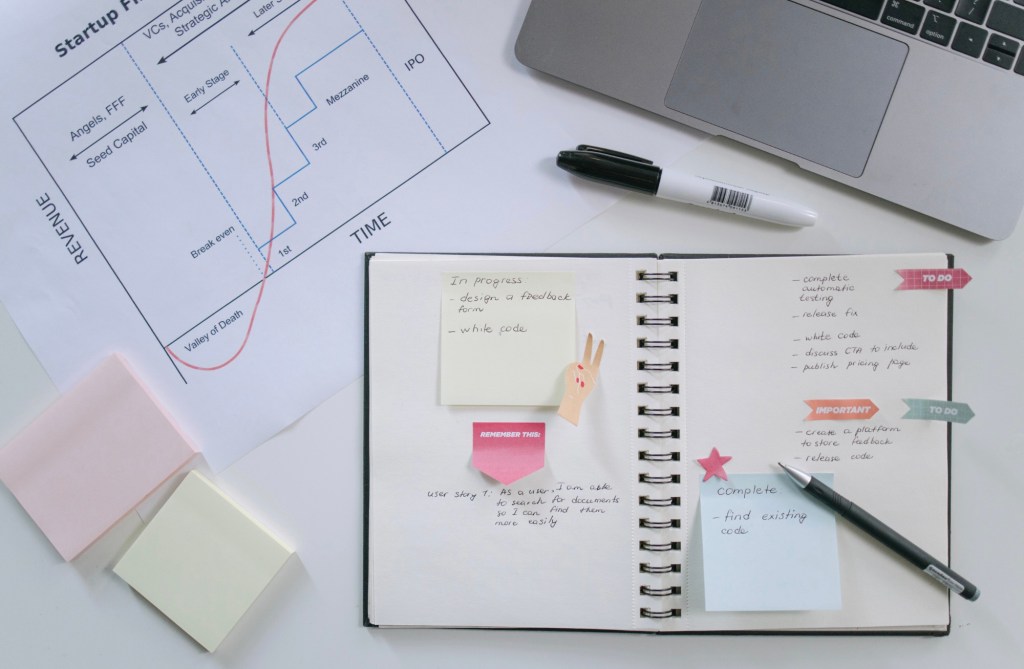
Most people hear the words “project management” and immediately think about corporate environments. It usually brings to mind large teams working towards deadlines and carefully planned timelines. For a long time I thought about it that way too. But once life started getting busier, I realized the same kind of thinking helps when you are simply trying to manage responsibilities and priorities.
At a certain point the responsibilities of everyday life begin to look a lot like a project. Work expectations and personal commitments all compete for the same limited time and attention. In my first post about navigating the middle of life, I wrote about how most of us are simply trying to stay grounded while everything is still unfolding. When responsibilities start piling up like that, the same kind of structured thinking used in project management can help bring a little clarity to the situation.
One of the most useful ideas from project management is the practice of stepping back and identifying what actually needs attention before jumping into the work. When everything feels urgent it is easy to react to whatever is in front of you. A simple structure can change that. Breaking a large task into smaller steps makes progress easier to see and manage. The work does not necessarily become smaller, but it becomes clearer and more manageable.
Thinking about responsibilities this way is part of what led me to start writing here. I recently read Known by Mark Schaefer and he explains that people become known by consistently sharing what they know in ways that are useful to others. That idea resonated with me because my educational background is rooted in project management, and many of the lessons from that field translate naturally into everyday life. Writing here is simply a way to explore how those ideas show up outside of work and how they can help bring a little more clarity to the responsibilities we all carry.
Take a moment to think about one responsibility that has been sitting on your mind lately. What would the first small step look like if you approached it with a little more structure?
Image credit: Ivan S, Pexels via Canva Pro










Leave a comment